Sunday, May 25, 2008

Communication Explained (Part 5 of 5)

Communication Model

Receiver: This portion of the model has an important role to play in communication because if the receiver is not present, then the communication model falls apart.

Saturday, May 24, 2008

Communication Explained (Part 4 of 5)

Communication Model

Decode: The greatest threat to effective communication is the decoding process. Far too often perfectly good messages are destroyed at this point. The receiver, trying to make sense of the message, attempts to decode the message and ends up coming to a faulty conclusion about the intended meaning of the message. This is easy to see in the case of different languages, but it also occurs with other forms of encoding as well. That's how most of us got to listen to the music we liked when we were young; our parents couldn't decode it properly!

Friday, May 23, 2008

Communication Explained (Part 3 of 5)

Communication Model

Channel: The channel is the chosen medium through which the encoded message is sent. It can be a room, airwaves, paper, stone, etc. Sometimes a combination of channels are used to transmit a message. Sometimes communication models will include "noise" or "interference" within the channel to represent degredation of the message. For example: A message is encoded for television broadcast. That broadcast then travels through the air into your television. The message then travels from your television into your ears. Each of these poses certain threats to the quality of the message when it is received.

I believe noise occurs at every stage of the model. Noise exists within the sender and the receiver as well as the encoding and decoding processes.

What channels do you use to share the gospel? What are some noise threats to the gospel in your context?

Thursday, May 22, 2008

Communication Explained (Part 2 of 5)

Communication Model

Yesterday we looked at the Sender. Today we're examining "Encoding."

Encode: Many people have never considered the idea that all forms of communication have been encoded in some way. Languages are the typical form of encoding, but there are others such as music, painting, sculpture, etc. Encoding poses a great threat to the communication process because it relies on the receiver being able to decode the message properly. Oh and all communication is encoded, so there's no way of getting around it.

What are some ways that you encode the gospel?

Wednesday, May 21, 2008

Communication Explained (Part 1 of 5)

Communication Model

I need to define some terms for you, so we will all be on the same page as we look at this model for the rest of the week.

Sender: The sender is the source of the communication. A sender does not have to be a person; it could be an organization, a device, an animal, or almost anything. For this reason the sender is represented by a circle on the diagram. For our discussion, the sender will almost always be either an organization (a church or a parachurch organization) or a person.

Tuesday, May 20, 2008

Communication and the Gospel

I sit at my computer today working through the far too lengthy to-do list. With Digsby running in the background feeding me information from my various IM clients, Twitter, Facebook, MySpace, and Yahoo mail, I received this twitter from Bobby Gruenwald from LifeChurch.tv (twitter): "Live from Saddleback http://qik.com/video/82585" which shows a live video feed from Bobby's trip to Saddleback Church out in Southern California. A few minutes later, I receive an email from Bill Koogler, a graduate of Dallas Theological Seminary, about setting up an online forum to discuss theology and ministry.

Billions of bits of information fly to me every day. In our connected world 1.3 billion people are utilizing the tools of communication, but it makes one wonder if communication is actually taking place when we think it is.

The following diagram is an example of a simple communication model.
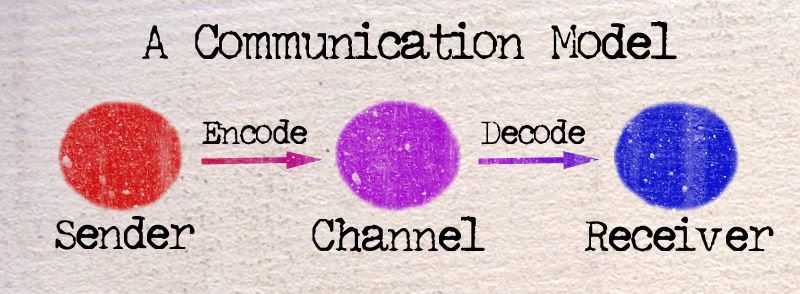
Communication Model

This week, I will break down the pieces of this model in order to show how communication works (in theory) and how this communication model can help you build relationships, improve your marriage, and share your faith.

I'll toss the question to you. Consider the diagram above and answer this question: Through these various tools of communication, do you believe effective communication is taking place? Why or why not?

Note: The following links are where you can find me in the online communities mentioned above.
Twitter
Facebook
MySpace

Sunday, April 27, 2008

I've Been Infiltrated!

Actual Surveillance Screenshot
I don't know how it happened or why, but Prodigal Jon over at Stuff Christians Like must have gotten a copy of my preaching calendar. Granted, the preaching calendar isn't under lock and key, but I have to wonder, "Why me?"

The evidence first presented itself upon arriving from church today. I sat down to read my fun blogs (my ministry blogs can wait until Monday), and what did I see? Prodigal Jon flaunting his recently-discovered knowledge of my preaching plan.

The evidence:
Yesterday Prodigal Jon posted this
#181 Preaching 87 Week Long Sermon Series on a Single Book of the Bible
Prodigal Jon clearly knows that today I preached sermon #50 from the book of Mark. Seriously. I started preaching from Mark on May 20, 2007. Today's sermon was from chapter 11 verse 12-26. Just wait, it gets better.

Mark 11:12-26 deals with one of the more famous events in the life of Jesus Christ. And what do you suppose Prodigal Jon's other post from yesterday was? You have to see it to believe it.
#179 Referring to that Jesus Clears the Temple Verse When You Get Angry

I just have one thing to say.

I'm onto you, Prodigal Jon!

Seriously though, all of you need to go over and subscribe to his blog, "Stuff Christians Like." It's a fun blog to read and really makes us laugh at ourselves.
Related Posts with Thumbnails